
Smart Homes

How Technology Is Transforming Modern Living
Welcome to the Future of Home Living:
Technology has transformed the way people work, communicate, travel, and manage their daily routines. Today, it is also changing the way we experience our homes. Smart homes combine modern residential design with connected devices and automated systems to make everyday tasks more convenient, efficient, and manageable.
Imagine adjusting your lights without walking across the room, checking who is at your front door while you are away, or setting your air conditioning to a comfortable temperature before returning home. These are examples of how smart-home technology can simplify everyday living when the appropriate devices and systems are installed.
For modern homebuyers, a property is no longer judged only by its location, size, or appearance. Technology, energy efficiency, security, and adaptability are also becoming important considerations. A well-designed smart home can bring together comfort, functionality, and thoughtful innovation without making daily life unnecessarily complicated.
At Nestora, we believe that the ideal home should support the way you want to live. Whether you are exploring a contemporary apartment, a family residence, or a luxury villa, understanding smart-home features can help you identify properties that meet your lifestyle needs today and may adapt to your requirements in the future.
1. What Is a Smart Home?
A smart home is a residence equipped with connected devices or automated systems that allow homeowners to monitor, control, or schedule certain household functions. Depending on the installation, these functions may include lighting, security, temperature, entertainment, appliances, and energy monitoring.
Smart-home devices can be operated through mobile applications, voice assistants, wall-mounted controls, or automated schedules. Some systems work through a central hub, while others connect directly to a home network.
For example, a homeowner may schedule outdoor lights to turn on in the evening, use a video doorbell to check visitors, or adjust a compatible thermostat remotely. Some systems can also combine multiple actions into a single routine.
However, not every modern home is automatically a smart home. Buyers should check which devices are actually installed, what features they support, and whether additional equipment or subscriptions are required.
Lifestyle benefit: Smart-home systems can provide greater convenience and control over selected household functions.
2. Smart Lighting for Comfort and Convenience

Lighting plays an important role in the atmosphere and functionality of a home. Smart lighting systems allow residents to control compatible bulbs, switches, and fixtures using an application, voice command, or preset schedule.
You can create different lighting settings for different activities. Bright lighting may be useful while working or preparing meals, while softer lighting can create a relaxing atmosphere in the evening.
Automated schedules can switch selected lights on or off at particular times. Motion sensors can also control lighting in suitable locations, such as hallways, entrances, and utility areas.
Smart lighting may support energy savings when it helps reduce unnecessary usage. However, the actual benefit depends on the type of lighting, configuration, and household habits.
When planning a smart lighting system, consider the compatibility of the switches and bulbs, the availability of manual controls, and whether the system will continue to function during an internet outage.
Lifestyle benefit: Convenient lighting controls can help create comfortable indoor environments and make daily routines easier.
3. Smart Security and Home Protection
Home security is an important consideration for homeowners, and connected devices can provide additional ways to monitor and manage access to a property.
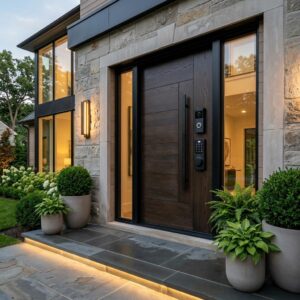
Smart security features may include video doorbells, connected cameras, motion sensors, digital door locks, and door or window contact sensors. Depending on the system, homeowners may receive notifications when a sensor is activated or view camera footage through an authorised mobile application.
Digital locks can offer alternatives to traditional keys, such as access codes or supported mobile credentials. Some systems allow temporary access for approved visitors or service providers.
However, connected security devices should be selected carefully. Strong passwords, software updates, secure network settings, appropriate camera placement, and privacy-conscious usage are essential.
Buyers should also understand the limitations of each device, including power requirements, internet dependence, storage options, and any ongoing subscription fees. Smart devices can support home security but cannot guarantee complete protection.
Lifestyle benefit: Connected security systems can improve visibility into certain home activities and provide convenient access-management options.
4. Smart Temperature Control and Indoor Comfort
Maintaining a comfortable indoor temperature is an important part of everyday living. Smart thermostats and compatible air-conditioning controls can help homeowners manage cooling and heating according to their preferences.
Depending on the equipment, residents may adjust settings remotely, create schedules, or use automated controls to maintain preferred temperatures at different times of the day.
For example, you might schedule cooling to begin before arriving home or reduce air-conditioning usage when the house is unoccupied. Some systems provide energy reports that help residents understand their consumption patterns.
The usefulness of smart temperature control depends on the existing heating or cooling equipment, the home’s insulation, the local climate, and the way the system is configured.
Before purchasing a smart thermostat or controller, confirm that it is compatible with your existing equipment and that installation is suitable for your property.
Lifestyle benefit: Smart temperature controls can make indoor comfort easier to manage and may help reduce unnecessary energy use.
5. Voice Assistants and Connected Home Control
Voice assistants can provide a convenient way to operate compatible smart-home devices. Instead of opening multiple applications, users may be able to issue a supported voice command to adjust lighting, play music, check information, or control selected appliances.
For example, a simple command may switch off connected lights or activate a preset evening routine. The exact functions depend on the voice assistant, the devices connected to it, language support, and the configuration of the home network.
Voice control can be particularly useful when your hands are occupied or when you want to operate multiple compatible devices together.
Privacy should remain a priority. Review microphone settings, voice-history controls, device permissions, and the information collected by the relevant service. Physical mute controls can be useful where available.
Lifestyle benefit: Voice control can simplify everyday interactions with compatible devices and make home automation easier to use.
6. Smart Appliances for an Easier Daily Routine

Modern appliances increasingly include connected features that allow homeowners to monitor or manage certain functions remotely. Examples include compatible washing machines, refrigerators, robotic vacuum cleaners, ovens, and dishwashers.
Depending on the appliance, users may receive maintenance notifications, check operating status, select supported settings, or schedule specific tasks.
A robotic vacuum cleaner, for example, may clean selected areas according to a schedule. A connected washing machine may notify you when a cycle is complete. These features can be useful for busy households that want to organise everyday chores more efficiently.
Nevertheless, connected appliances may cost more than conventional alternatives. Before buying, compare reliability, repair options, spare-parts availability, energy ratings, and the long-term support offered by the manufacturer.
Choose appliances according to their practical usefulness rather than buying technology simply because it is available.
Lifestyle benefit: Connected appliances can help organise household tasks and provide more convenient ways to monitor selected activities.
7. Energy Efficiency and Smarter Resource Management
Smart-home technology can help residents understand and manage their energy consumption. Compatible energy monitors, smart plugs, lighting controls, and automated climate systems may provide information about how electricity is used throughout the home.
For example, a smart plug may allow you to schedule a compatible device or monitor its electricity consumption. Energy-monitoring systems may help identify equipment that uses more power than expected.
Smart-home features can also work alongside other energy-efficient measures, such as LED lighting, appropriate insulation, efficient appliances, and rooftop solar systems where suitable.
It is important to distinguish monitoring from actual savings. A device does not automatically reduce energy use simply because it is connected. Savings depend on how the system is used and whether it changes consumption patterns.
When evaluating a smart property, ask about the installed equipment, energy-monitoring capabilities, system compatibility, and any ongoing costs.
Lifestyle benefit: Better information and automation can help homeowners make more informed decisions about household energy use.
8. Smart Homes and Sustainable Living

Sustainability is becoming an important consideration in residential design. Smart-home technology can complement sustainable building features by helping residents manage energy, water, lighting, and certain household systems more efficiently.
Examples include automated lighting schedules, energy-monitoring devices, compatible irrigation controllers, and systems that track selected aspects of resource consumption.
A smart irrigation controller may adjust watering schedules according to programmed settings or supported environmental information. This can help manage garden watering when configured appropriately for local conditions.
However, technology is only one part of sustainable living. Building orientation, natural ventilation, insulation, water-efficient fixtures, landscaping, and responsible household habits also influence resource consumption.
Homebuyers should look for practical, verifiable features rather than relying only on descriptions such as “eco-smart” or “green technology.”
Lifestyle benefit: Combining appropriate automation with efficient building design can support more responsible use of household resources.
9. Designing a Smart Home for Families and Professionals
Smart-home features can be useful for people with different routines and responsibilities. Families may appreciate connected doorbells, scheduled lighting, or compatible sensors that provide information about certain areas of the home.
Professionals working long hours may value remote control of selected appliances, lighting schedules, and temperature settings. People who travel frequently may prefer authorised remote access to supported security devices.
For older residents or people with mobility limitations, thoughtfully selected voice controls and automated functions may make certain tasks easier. The suitability of these features depends on individual needs, device reliability, and the availability of simple manual alternatives.
The best approach is to identify everyday challenges first and then select technology that addresses them.
It is also important to create a straightforward system that everyone in the household can use. Complicated setups can become frustrating if they require frequent troubleshooting or depend on devices that are difficult to operate.
Lifestyle benefit: A carefully planned smart home can adapt to different household routines and provide convenient control over selected functions.
10. Smart Home Privacy and Cybersecurity
Connected homes offer convenience, but they also require responsible management of digital security and personal information.
Many smart devices communicate through home networks, mobile applications, or cloud services. Weak passwords, outdated software, and poorly secured networks can increase the risk of unauthorised access.
Homeowners can reduce some risks by following practical security measures:
-
Use strong, unique passwords for device accounts.
-
Enable multifactor authentication when available.
-
Install firmware and software updates regularly.
-
Secure the home Wi-Fi network and router.
-
Review microphone, camera, and location permissions.
-
Buy devices from reputable manufacturers that provide clear support policies.
-
Remove access for former users and reset devices before selling or giving them away.
-
Check how long video footage and other personal information are stored.
Consider how the home will function if the internet connection or a connected service becomes unavailable. Essential functions should have suitable manual alternatives where possible.
Lifestyle benefit: Good security practices help homeowners use connected technology more thoughtfully and reduce avoidable privacy risks.
11. What to Check Before Buying a Smart Home
If you are planning to purchase a smart apartment, villa, or independent house, it is important to understand exactly what the property offers.
Use the following checklist when comparing properties:
-
Installed features: Confirm which smart devices and systems are included in the purchase.
-
Compatibility: Check whether devices can work together and whether they support commonly used platforms.
-
Connectivity: Assess Wi-Fi coverage and the availability of suitable network infrastructure.
-
Security: Ask about device access, account ownership, software updates, and data privacy.
-
Energy performance: Review the property’s actual efficiency features and available consumption information.
-
Maintenance: Understand repair responsibilities, warranties, and replacement costs.
-
Subscriptions: Check whether cameras, storage, or automation services require ongoing payments.
-
Manual controls: Confirm that essential functions remain usable when connected services are unavailable.
-
Future upgrades: Ask whether the system can accommodate additional devices or newer technology.
-
Total cost: Consider installation, maintenance, subscriptions, and potential equipment replacements.
If the property is part of a new development, ask the builder for a clear list of included systems and the relevant technical specifications. Avoid assuming that every advertised feature will be installed in every unit.
Conclusion: Discover Smarter Living With Nestora
Smart homes represent an evolving approach to residential living, bringing together connected technology, convenience, security management, and more informed resource use.
From automated lighting and connected appliances to smart temperature controls and energy monitoring, the right features can make selected everyday tasks easier. However, a successful smart home is not defined by the number of devices it contains. It is defined by how effectively its technology supports the people who live there.
When exploring your next property, consider your lifestyle, budget, privacy requirements, and future needs. Look for systems that are reliable, practical, easy to maintain, and compatible with your daily routine.
At Nestora, we believe that the right home combines thoughtful design with features that make everyday living more comfortable. Explore properties that match your priorities and discover how modern technology can complement the way you want to live.
Nestora — Find Your Place, Love Your Space.
Your future home can be more than a beautiful space. With the right planning, it can be a smarter place to live.